
Playbook5 min
The last five minutes are the call
Most meetings are decided in the closing minutes and most people spend them summarising. A sequence for the end, and the four questions that work.
Project and delivery managers
The status call that goes well is usually the one where nothing was surfaced. HuddleOwl watches for the opposite of comfort: the deferral, the silent scope, the quiet stakeholder who did not get a turn.
Apple Silicon · free forever for individuals · no account · v0.5.0
Status calls where the risk actually gets said out loud
Cues arrive during the call, and a cue that cannot point at the line in the transcript it is reacting to is discarded in the backend before it reaches you. These are the shape of the ones that survive.
That is new scope and it went in without being called new scope
Third meeting running that this decision has been deferred to next week
Two people have not spoken and one of them owns the dependency
Four actions agreed, one owner named
Live signals
The scorecard afterwards
A dimension the call never tested is left unscored rather than quietly given a zero, because a zero you did not earn teaches you nothing.
About 40 seconds after you hang up
A scored rubric, a verdict and the one next step that matters. Everything else is a tile you open, and the page underneath never moves.
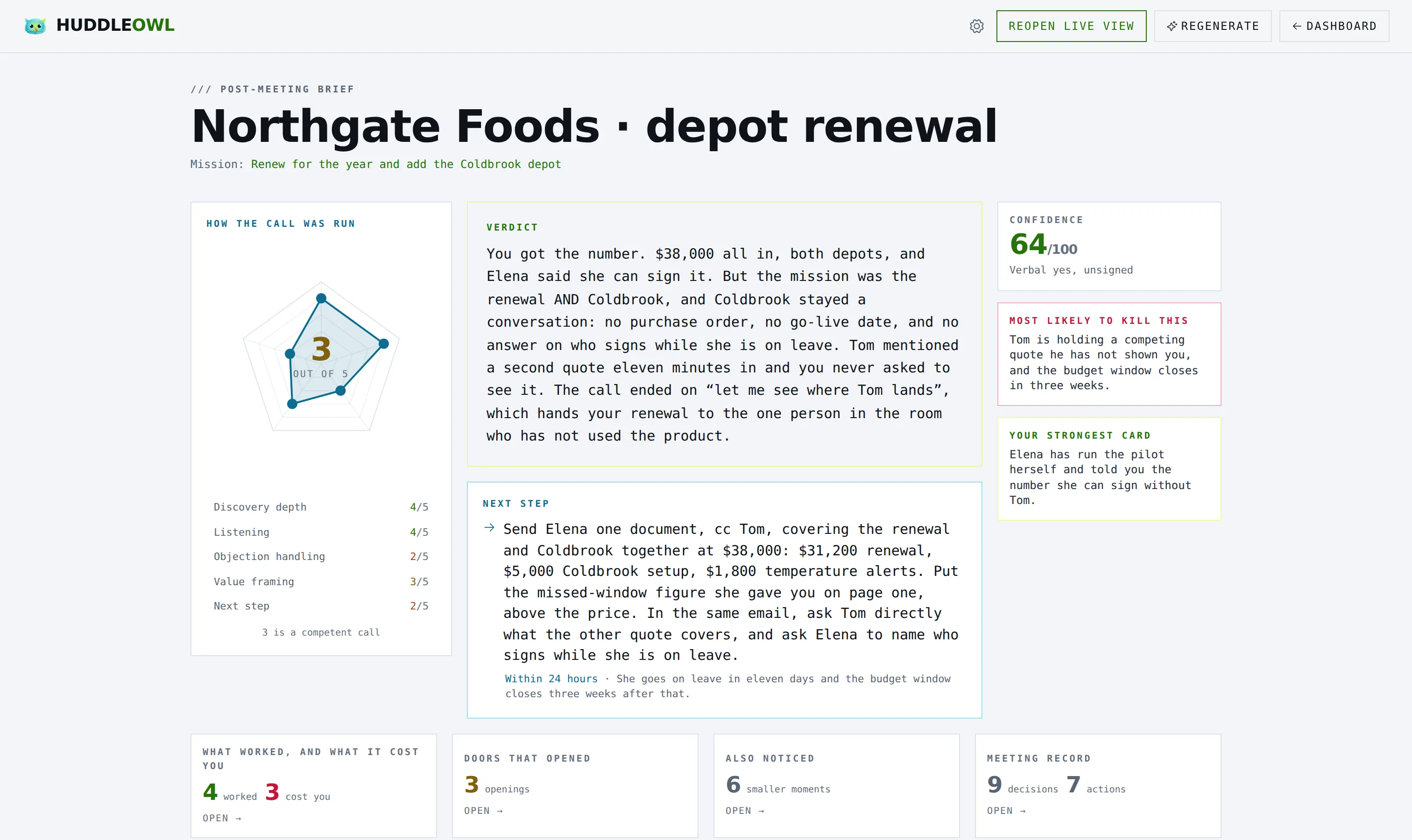
Set what the meeting is for and it watches the gap between that and what is being said.
You pick one of these when you set the meeting up. It becomes the thing the call is measured against, and the reason a cue can say you have not got there yet:
What it is not
It does not touch your tracker. Actions come out as text and as a calendar file, and you put them wherever they live.
No account, no card, no bot in your next call. Download it and run one meeting through it.
Apple Silicon · free forever for individuals · no account · v0.5.0

