
Playbook5 min
Taking interview notes without losing the room
Typing through an interview costs you the room and gives notes you cannot defend. A structure for evidence-first notes, without looking down.
Recruiters and hiring managers
The two failure modes of an interview are asking a candidate to agree with you, and letting a good story stand in for evidence. Both are hard to catch while you are doing them, and both show up plainly in a transcript.
Apple Silicon · free forever for individuals · no account · v0.5.0
Interview coaching that runs on your own machine
Cues arrive during the call, and a cue that cannot point at the line in the transcript it is reacting to is discarded in the backend before it reaches you. These are the shape of the ones that survive.
Two mentions of the team and none of a decision they made alone. Ask for the call that was theirs
They said the migration was hard and you moved on. What broke, and what did they do first?
Nothing yet on how they handle disagreement, and the role is half review
22 minutes in and the candidate has not been told what happens next
Live signals
The scorecard afterwards
A dimension the call never tested is left unscored rather than quietly given a zero, because a zero you did not earn teaches you nothing.
About 40 seconds after you hang up
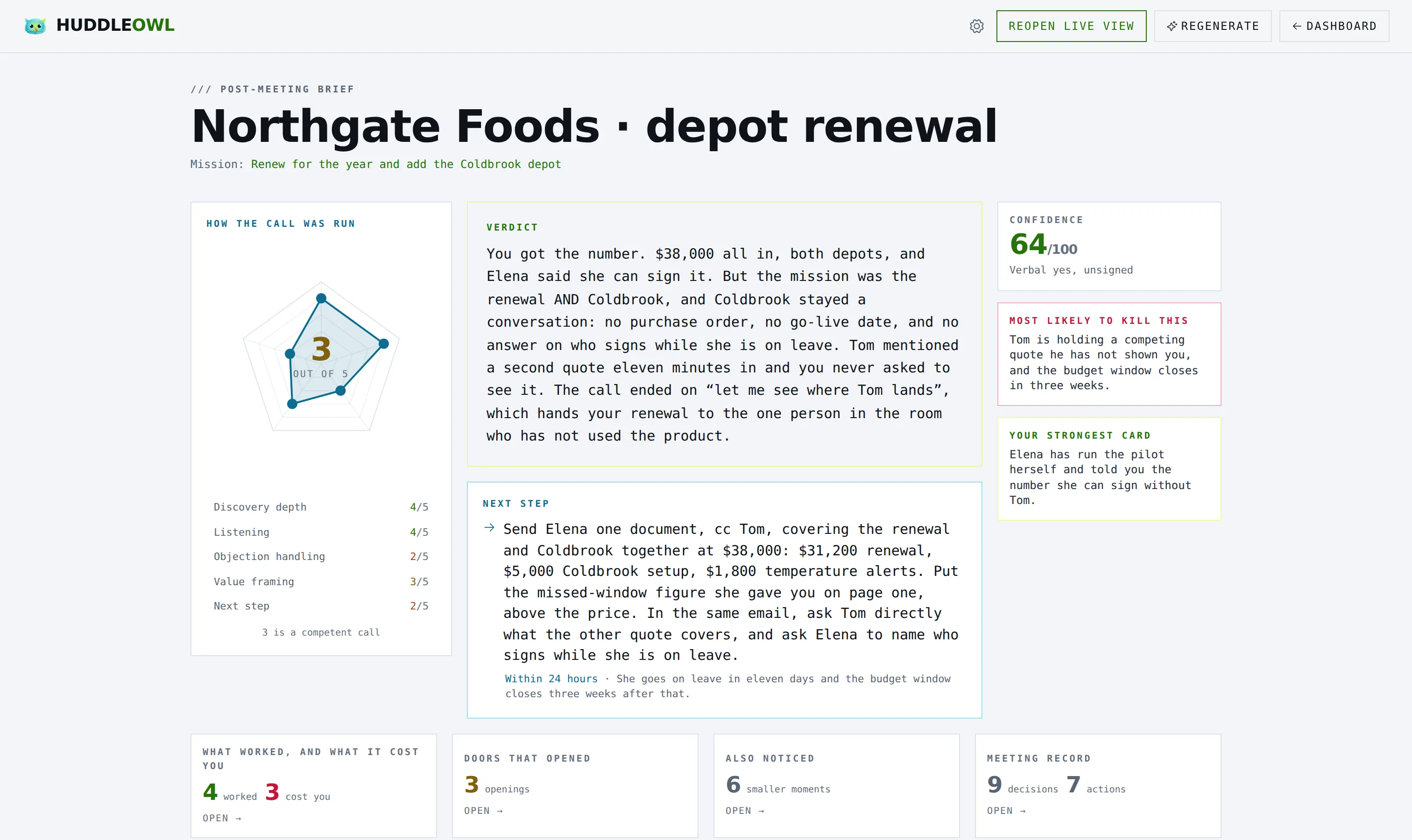
A scored rubric, a verdict and the one next step that matters. Everything else is a tile you open, and the page underneath never moves.
Tell it what this interview has to establish and the cues push at that, not at a generic script.
You pick one of these when you set the meeting up. It becomes the thing the call is measured against, and the reason a cue can say you have not got there yet:
What it is not
It is not an ATS and it does not score candidates against each other. It scores how you ran the interview, which is a different and less popular question.
No account, no card, no bot in your next call. Download it and run one meeting through it.
Apple Silicon · free forever for individuals · no account · v0.5.0

