
Answers5 min
Where your meeting recordings go once the call ends
The path an AI notetaker's audio takes, the questions worth asking a vendor, and the four answers in a privacy policy that should change your mind.
Coaching and training
The hardest part of coaching someone on their conversations is that you were not in them. HuddleOwl scores every call against the same rubric, so the trend is real.
Apple Silicon · free forever for individuals · no account · v0.5.0
Why this is awkward here
Your clients' calls are their clients' confidential conversations. Asking them to route those through a vendor to be coached is a big ask, and often the reason coaching stays anecdotal.
Where it earns its place
Set what the call is supposed to achieve before it starts, and the cues are about your call rather than about calls in general.
Between-session practice
Consistent scoring means the improvement is measurable rather than remembered.
Live shadowing without shadowing
Cues arrive on their call, in the tone you set, without you being in the room.
Reviewing an old recording
Drop in audio they already have and get the same rubric back.
Building your own standard
Four role rubrics ship with it, and the scoring is the same every time.
The coaching tone is a setting, so the cards read like something your client would actually take.
The part that makes it usable as evidence
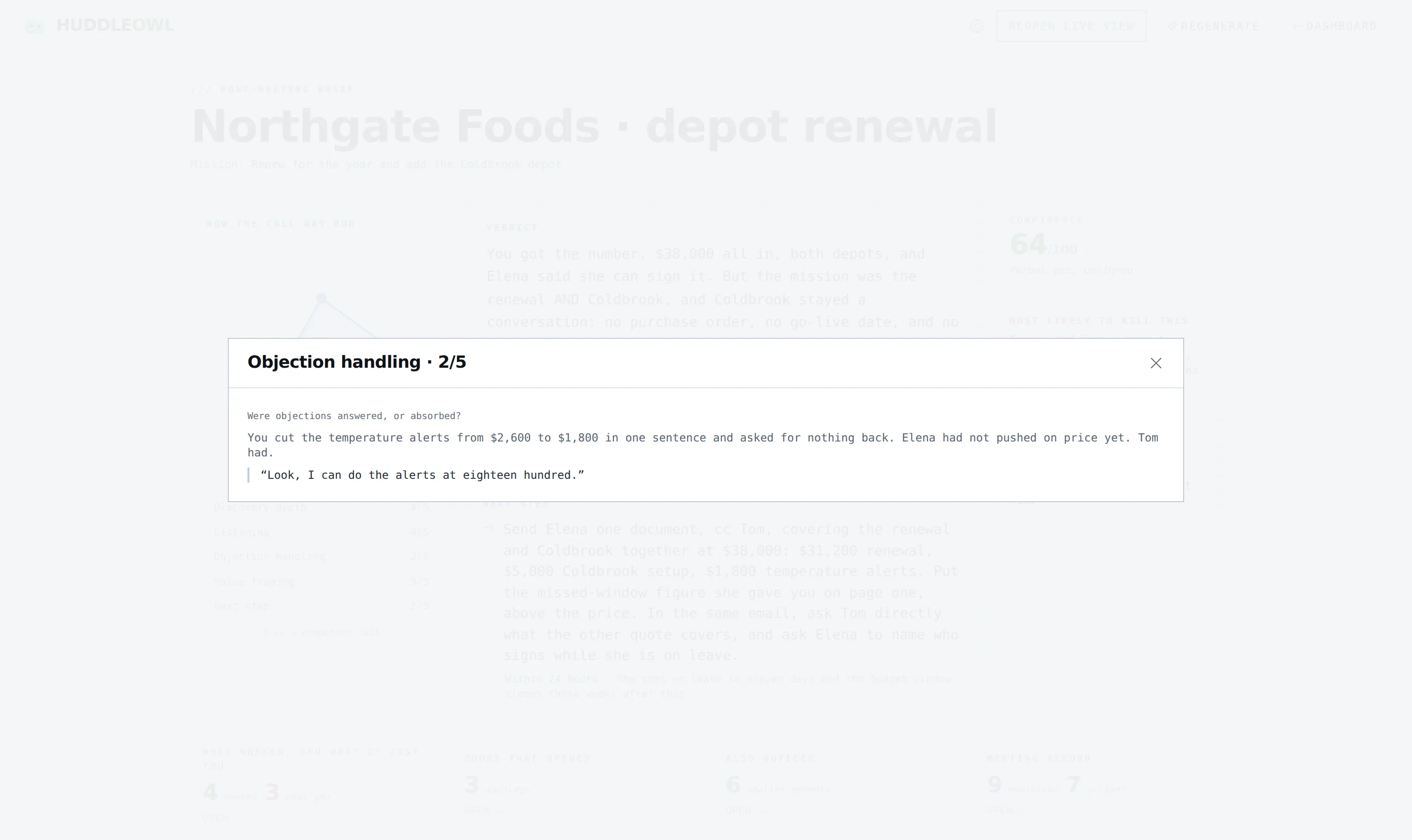
A score you cannot check is an opinion. Click any dimension and it opens the reason and the exact line from the transcript that produced it.
No account, no card, no bot in your next call. Download it and run one meeting through it.
Apple Silicon · free forever for individuals · no account · v0.5.0

